
Flooring Guide
What Is LVP Flooring? Pros, Cons and Cost
 By Dioclecio Gomes, Founder & Owner5 min readUpdated October 2, 2026
In This Guide
LVP stands for luxury vinyl plank, a waterproof, wood-look flooring built in layers with a printed image under a clear wear layer. This Old House says well-cared-for luxury vinyl can last up to 25 years, with warranties from 15 years to limited lifetime, but that it cannot be refinished and is unlikely to increase resale value. Installed in Massachusetts, LVP typically runs $4 to $14 per square foot.
LVP flooring is one of the most requested floors we install, and the term confuses a lot of homeowners. This Old House describes luxury vinyl plank as flooring designed to replicate the look of hardwood in a range of widths and lengths, with realistic grain patterns and textures. Here is what that means in practice, where it works well, and where another floor is the better call.
What Does LVP Stand For?
LVP means luxury vinyl plank. A close cousin is LVT, luxury vinyl tile, which This Old House says mimics natural stone or ceramic tile in various shapes and sizes, sometimes with grout lines for added realism. Both are vinyl flooring built to look like a more expensive material, in a more durable and easier to maintain form.
How Is LVP Flooring Made?
This Old House describes a typical plank as a top wear layer of polyurethane, measured in mils (thousandths of an inch), over a photo-printed layer that gives the realistic wood or stone look. Rigid-core planks add a core that comes in two main types:
- SPC (stone plastic composite): limestone mixed with PVC and stabilizers, denser and more rigid.
- WPC (wood plastic composite): wood fibers, plastics and foaming agents, softer and more comfortable underfoot.
Wear layer thickness matters for durability. Bob Vila notes that a 12-mil wear layer is frequently seen as the boundary between domestic and light commercial use, and that 20 mil and up is considered commercial, while good-quality vinyl plank is generally 6 mil and up.
LVP Flooring Pros
- Waterproof and easy to clean. This Old House describes luxury vinyl as waterproof and easier to clean.
- Realistic looks and design range. Wood-look and tile-look options in many colors and sizes.
- Lower cost than hardwood. Both our pricing and This Old House place it among the budget-friendly options.
- Low maintenance and comfort underfoot. No refinishing schedule, and softer than tile.
- Repairable by the plank. MSI, a flooring manufacturer, notes you can replace a single plank or tile when needed.
- DIY-friendly installation options. Click-and-lock floating planks are common, though subfloor prep still decides the result.
LVP Flooring Cons
This Old House lists these drawbacks, and we agree with all of them:
- It cannot be refinished. When the wear layer is worn through, the floor is replaced, not sanded.
- It can scratch, be cut and fade. Sharp objects and heavy furniture can damage it, and MSI notes that LVP can fade if it is regularly exposed to direct sunlight.
- It is unlikely to increase resale value the way hardwood can.
- Limited compatibility with radiant heating, so check the manufacturer's specs if you have in-floor heat.
- Environmental concerns around vinyl production and disposal.
Want a number for your floor?
We measure, check the subfloor and give you a written price after a free in-home visit.
Get a Free Flooring EstimateIs LVP Flooring Good?
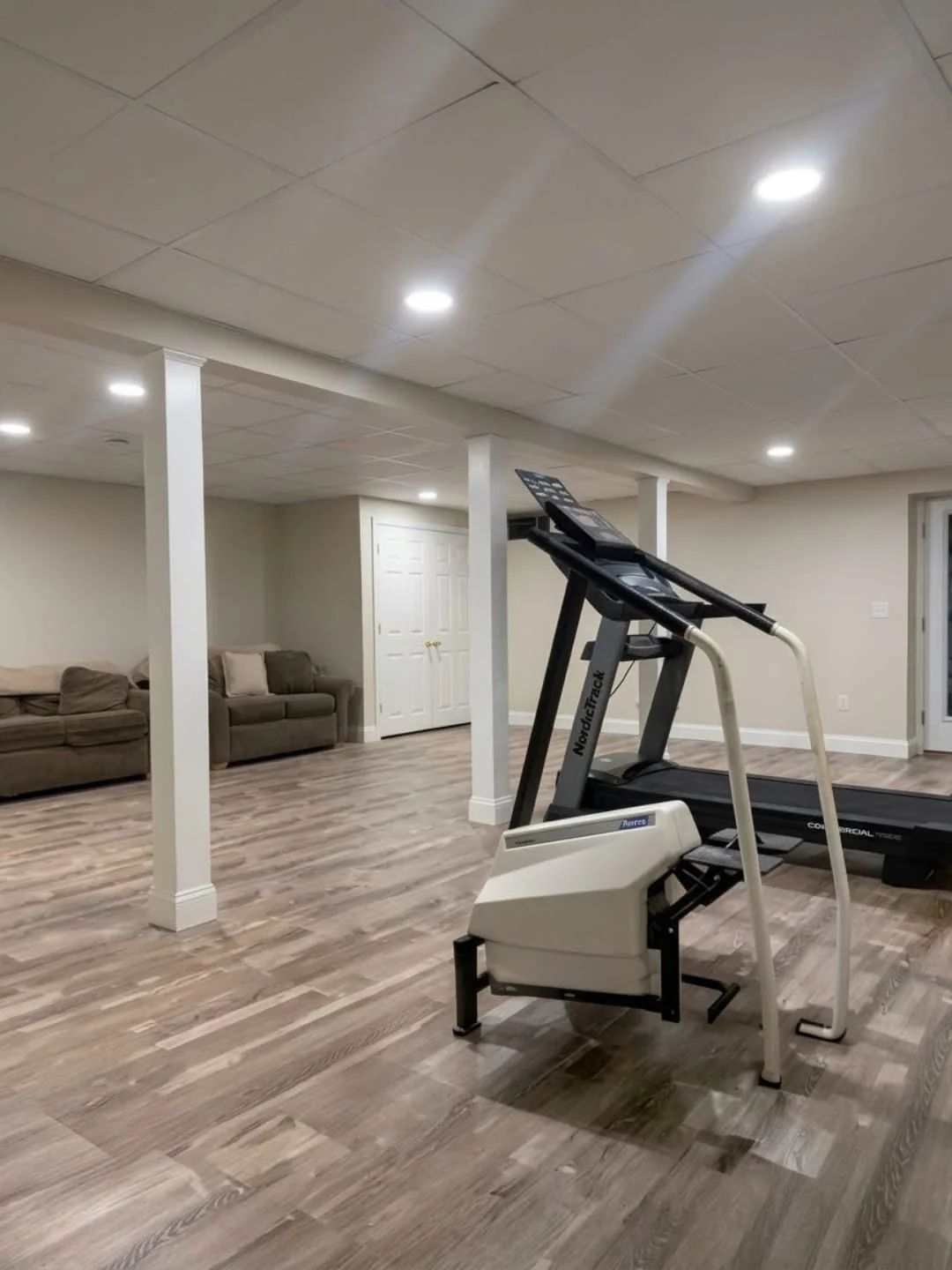
Yes, for the right rooms. Its water resistance and easy care make it a strong fit for kitchens, entries, laundry rooms and many finished basements, provided the subfloor is flat and dry. It is a weaker choice where you want resale value to track the floor, or in a room where you plan to refinish and renew the surface over decades. For that, hardwood is usually the better long-term floor.
Subfloor and Installation
There are two installation methods, click-and-lock floating and glue-down. This Old House says you need a flat, clean subfloor, and that glue-down products tend to telegraph high and low spots in the surface underneath. Bob Vila adds that a small gap should be left around the edges to allow for the floor settling, sized as the manufacturer recommends. Subfloor repair is where many LVP jobs go wrong, which is why we assess it before quoting. MSI also cautions that glue-down vinyl can be difficult to remove once the adhesive has dried, so choose the method with the future in mind.
How Much Does LVP Flooring Cost in Massachusetts?
Our flooring installation pricing for LVP runs $4 to $14 per square foot installed in Massachusetts, and a typical 500 square foot main floor lands between $2,000 and $7,000. Old floor removal is included in our estimate, and the final number depends on the product's thickness and wear layer, the condition of the subfloor and the layout. For comparison, hardwood runs $8 to $20 per square foot installed.
The Bottom Line
LVP is a waterproof, wood-look floor that costs $4 to $14 per square foot installed in Massachusetts and can last up to 25 years, but it cannot be refinished and rarely adds resale value. Pick the wear layer and core for how the room is used, and get the subfloor right before anything is laid. Get a Free Flooring Estimate
FAQ
What does LVP stand for in flooring?
LVP stands for luxury vinyl plank, a vinyl flooring made in plank shapes to replicate the look of hardwood. LVT, luxury vinyl tile, is the tile-shaped version that mimics stone or ceramic.
Is LVP flooring waterproof?
This Old House describes luxury vinyl as waterproof and easier to clean. MSI, a flooring manufacturer, calls it 100% waterproof and suitable for indoor spaces prone to moisture. The planks resist water, but moisture coming from below the floor still needs to be addressed, and the subfloor should be flat and clean.
How long does LVP flooring last?
This Old House says well-cared-for luxury vinyl can last up to 25 years, with most warranties ranging from 15 years to limited lifetime depending on the thickness of the vinyl and wear layer.